Dispute Resolution for 3PLs: How Video Evidence Changes Everything
It’s Thursday afternoon. Your client account manager pings you. A brand client says three customers reported wrong items this week. They want answers. They want to know what happened, who was responsible, and what you’re doing about it.
You pull up the WMS logs. All three orders show as “completed” and “shipped.” Scan-verify records show no exceptions. The system says everything was right. But three customers disagree. Now you need to figure out who’s telling the truth, and you need to do it before your client starts requesting quotes from other 3PLs.
This scenario plays out at 3PLs constantly. Disputes chew up ops time, erode client trust, and cost real money. Video evidence from the pack station changes the entire dynamic.
The dispute lifecycle without evidence
Let’s trace a typical order dispute at a 3PL from start to finish.
Day 1: The claim arrives
A brand client forwards a customer complaint. “Customer received a blue medium instead of a red large.” The client wants an explanation and a resolution within 48 hours.
Your account manager forwards it to the ops team. The ops manager opens a ticket. The investigation begins.
Day 1-2: The investigation
The ops manager pulls up the order in the WMS. Items scanned, order completed, tracking number assigned, delivered. Every checkpoint shows green.
But the WMS only tells you what was scanned, not what was physically placed in the box. A scan record of “red large” doesn’t prove a red large was packed. It proves a barcode was scanned.
Next step: CCTV. If the facility has cameras over the pack stations, the ops manager identifies the order date, time, and station, then scrubs through continuous footage trying to find the 90-second window when that specific order was packed. The station processes 50+ orders per hour. Finding the right segment takes 20-30 minutes. Reviewing it takes another 10-15. Often the camera angle is too wide, the resolution too low, or the footage has already been overwritten by the time the complaint arrives.
Total investigation time: 45-60 minutes per incident. For an ops manager earning $30-40/hour fully loaded, that’s $15-25 in labor per investigation. And the investigation is often inconclusive.
Day 2-3: The inconclusive result
Most investigations end in one of two outcomes:
“We can’t determine what happened.” The evidence doesn’t exist or isn’t clear enough. You can’t prove the order was packed correctly, but you also can’t confirm it was wrong. Stalemate. The 3PL almost always absorbs the cost.
“The scan records show it was correct.” The ops manager reports that the system shows the right items were scanned. The client pushes back: “Then why did the customer receive the wrong item?” You can’t answer that. Scans don’t equal proof.
Day 3-5: The resolution (and the cost)
Without evidence to resolve the dispute definitively, the 3PL typically:
- Credits the client for the error
- Ships a replacement to the customer
- Pays any SLA penalty triggered by the incident
- Accepts responsibility even if they may have been right
Direct cost per incident: $56 on average (reshipping, labor, credit, penalty). The indirect cost is worse: client confidence drops. Three inconclusive disputes in a month, and the client starts asking harder questions at the next QBR.
The volume problem
This isn’t a once-a-month thing. A mid-size 3PL processing 10,000+ orders daily at the WERC median 1.1% error rate generates 110 potential errors per day. If only 10% become formal disputes, that’s 11 per day. Roughly 55 per week. At 45 minutes each, that’s over 41 hours of ops investigation time per week — more than a full-time employee doing nothing but investigating complaints.
The dispute lifecycle with video evidence
Now let’s run the same scenario with order-level video evidence captured at the pack station.
Day 1: The claim arrives
Same as before. Client reports three wrong-item complaints. Account manager forwards to ops.
Day 1: The investigation (5 minutes)
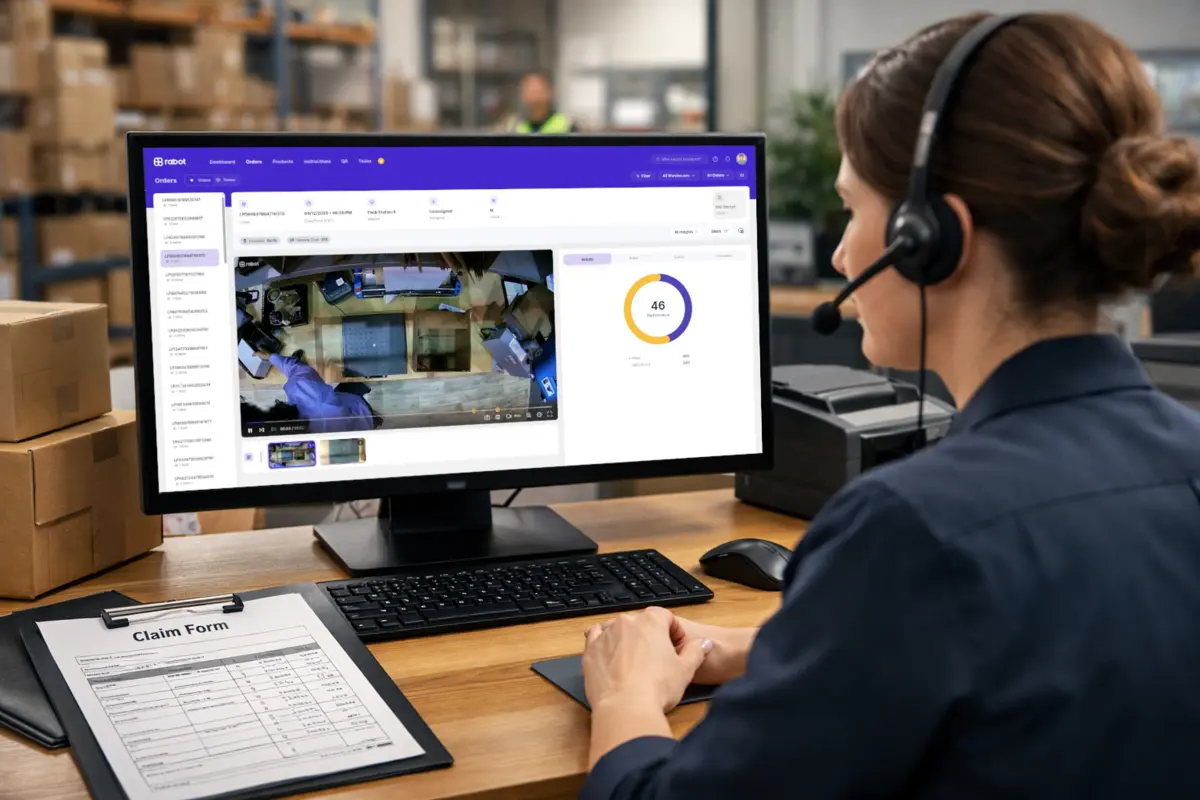
The ops manager searches by order number in the pack verification system. Back comes a video clip showing exactly what was packed. Timestamped. Linked to the station, the operator, and the order manifest.
The ops manager watches the clip. It takes less than a minute per order.
Scenario A: The video shows the packer placed a blue medium in the box instead of a red large. Error confirmed. Root cause is identified: the packer grabbed from the adjacent tote. The ops manager documents the finding, initiates a reship, and flags the root cause for the station supervisor.
Scenario B: The video shows the packer placed the correct item (red large) in the box. The order was packed correctly. The error occurred somewhere else, maybe during shipping (carrier swap), maybe the customer is mistaken, or maybe the customer is attempting fraud. Either way, the 3PL has video proof that they packed it right.
Total investigation time: 5 minutes. Not 45.
Day 1: The resolution
If the 3PL was at fault: Share the evidence with the client, acknowledge the error, explain the root cause, and describe the corrective action. This kind of transparency actually strengthens the relationship. It shows accountability, not defensiveness.
If the 3PL was not at fault: Share the video with the client. The clip shows the correct item going into the box. Dispute resolved. No credit, no penalty, no hit to your accuracy metrics. The client sees proof, and trust in your operation goes up because the evidence is right there.
The numbers: before and after
Let’s quantify the impact using real metrics from 3PLs that have deployed pack station video evidence.
Investigation time
| Metric | Before | After |
|---|---|---|
| Time per investigation | 45-60 minutes | 5 minutes |
| Weekly investigations (est.) | 12+ | 12+ |
| Weekly investigation labor | 9-12 hours | 1 hour |
| Annual investigation labor | 470-625 hours | 52 hours |
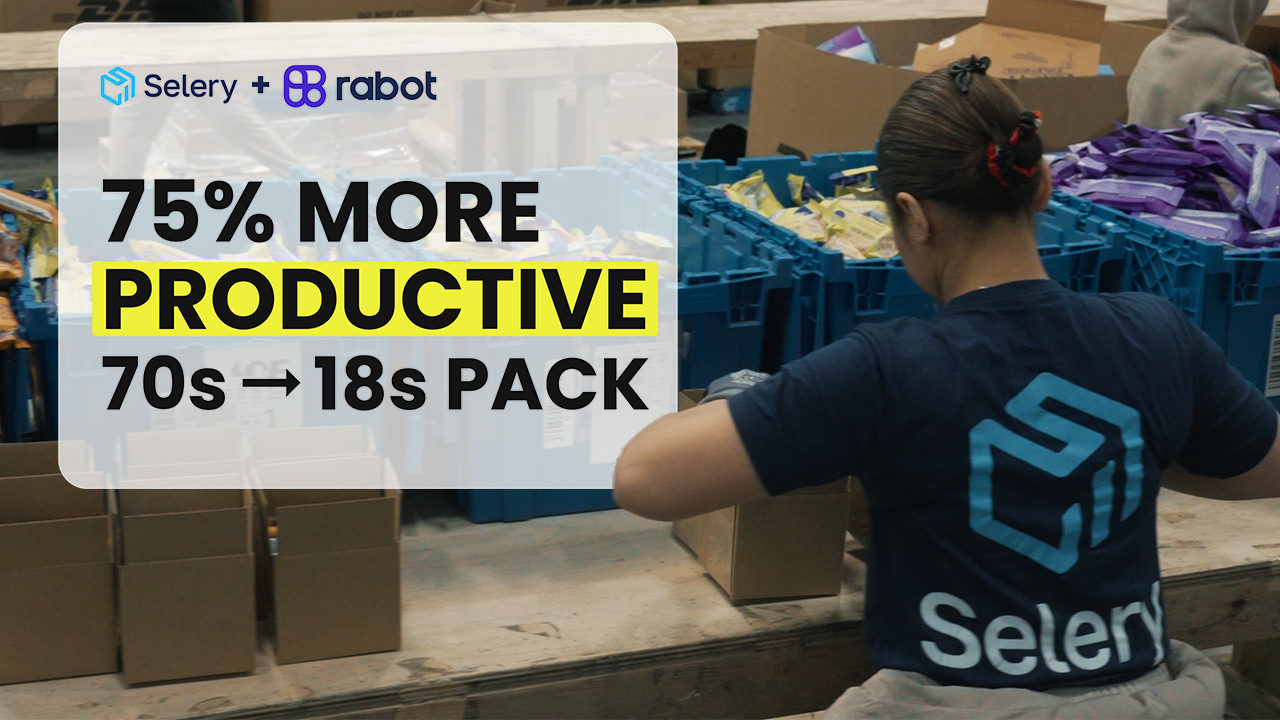
Highline Commerce reported a 95% reduction in investigation time after deploying pack station video evidence. That matches the math: from 45 minutes to about 2-3 minutes per investigation.
Dispute liability
Manifest.eco eliminated 90% of dispute liability within 15 days of deployment. The reason is simple: when you have video showing what was packed, most disputes resolve instantly. The 3PL either fixes a confirmed error or clears their name with evidence. The ambiguous, costly middle ground disappears.
Think about that. Nine out of ten disputes that previously cost money were resolved without cost to the 3PL. In some cases the video proved the 3PL packed correctly. In others, it identified the exact root cause and enabled targeted fixes that prevented recurrence.
Client retention
Harder to quantify, but 3PLs using visual evidence report it consistently. When clients see that you’ve invested in verifiable quality and can produce evidence for any order on demand, the relationship shifts.
At QBRs, instead of defending accuracy complaints with system logs, you present visual evidence and concrete data. The client doesn’t have to trust your numbers — they see the proof. Brilliant Fulfillment achieved 5X ROI within 2 months, and client retention was a real contributor to that return.
How video evidence works at the pack station
The technical setup is simpler than you’d expect given the operational impact.
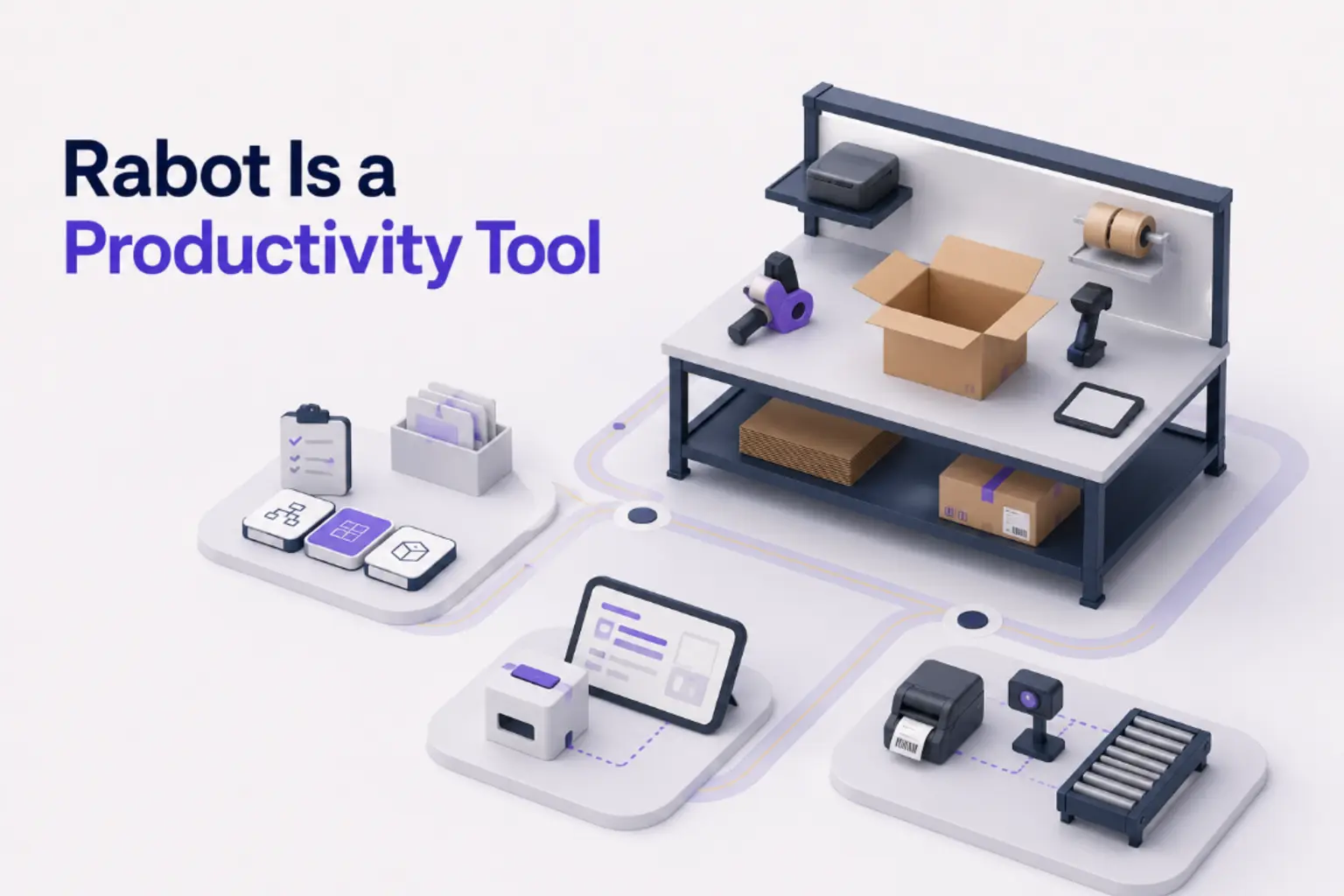
Cameras: Standard USB or IP cameras mounted at each pack station. No proprietary hardware. No complex installation. The camera captures the packing surface and the area where items are placed before going into the box.
Edge processing: An edge device at or near the station processes the video feed locally. The system works even if internet connectivity drops, and latency is minimal — no round trip to a cloud server.
Order linking: The system links video footage to specific order numbers. When an order is assigned to a station, the system tags all captured footage with that order ID. When you search for an order, you get exactly the footage for that order, not hours of general station footage.
Retention: Footage is stored for a configurable period, typically 30-90 days. This covers the window in which most disputes arise. Some operations retain longer for high-value clients or products.
Access: The ops team accesses footage through a portal. Search by order number, date, station, or operator. Some systems provide client-facing access so brand clients can look up their own orders without involving the 3PL’s ops team.
Rabot integrates across the major WMS platforms running in 3PL facilities, automatically linking orders to visual evidence captured at the station. Every order that passes through a Rabot-equipped station becomes part of a searchable evidence library.
Building the business case
If you’re making the case internally for pack station video evidence, here are the numbers to present.
Direct labor savings
Calculate your current investigation time:
Annual investigation labor cost = (Disputes per week × Minutes per investigation × 52 weeks × Hourly ops manager rate) / 60
For a 3PL handling 12 investigations per week at 45 minutes each with an ops manager at $35/hour:
(12 × 45 × 52 × $35) / 60 = $16,380/year in investigation labor alone
After deployment (5 minutes per investigation):
(12 × 5 × 52 × $35) / 60 = $1,820/year
Annual savings: $14,560 just in investigation labor.
Dispute liability reduction
Calculate your current dispute cost:
Annual dispute cost = Disputes per week × Average cost per dispute × 52
For 12 disputes per week at $56 average:
12 × $56 × 52 = $34,944/year
If video evidence eliminates 90% of that liability (matching Manifest.eco’s result):
Annual savings: $31,450
Total first-year savings
Investigation labor + dispute liability = $14,560 + $31,450 = $46,010 for a mid-size operation. Larger operations with more volume and more disputes see proportionally larger returns.
This doesn’t include the hardest-to-quantify but most valuable benefit: client retention. Keeping one additional client that was considering leaving due to quality concerns can be worth $200K-500K+ in annual revenue.
Getting started
If you’re a 3PL evaluating video evidence for dispute resolution, start here:
- Audit your current dispute volume. How many investigations per week? How long does each take? What percentage are resolved conclusively?
- Calculate your dispute costs. Use the formulas above. Include investigation labor, credits, penalties, and reshipping.
- Pilot on your most disputed client’s stations. Deploy video evidence on the stations that handle your highest-dispute-rate client. Measure the impact over 30 days.
- Share evidence with the client during the pilot. Let them see the capability. Their reaction will tell you whether this is a competitive advantage worth scaling.
The 3PLs that moved early on video evidence aren’t just resolving disputes faster. They’re winning disputes they shouldn’t have been paying for, retaining clients who might have left, and walking into RFP presentations with a quality story that competitors running on scan logs and promises can’t match.