Best AI for Pack Stations in 2026: A Buyer's Guide
Two years ago, putting AI on a pack station meant a pilot program, a dedicated IT team, and a six-figure budget. That’s changed. Multiple vendors now offer vision-based verification, analytics, and automation for pack stations. But the products differ enough that choosing the wrong one can mean months of integration work for a solution that doesn’t fit your operation.
This guide profiles the major players, explains what separates them, and gives you a framework for making the decision.
What makes a pack station “AI-powered”?
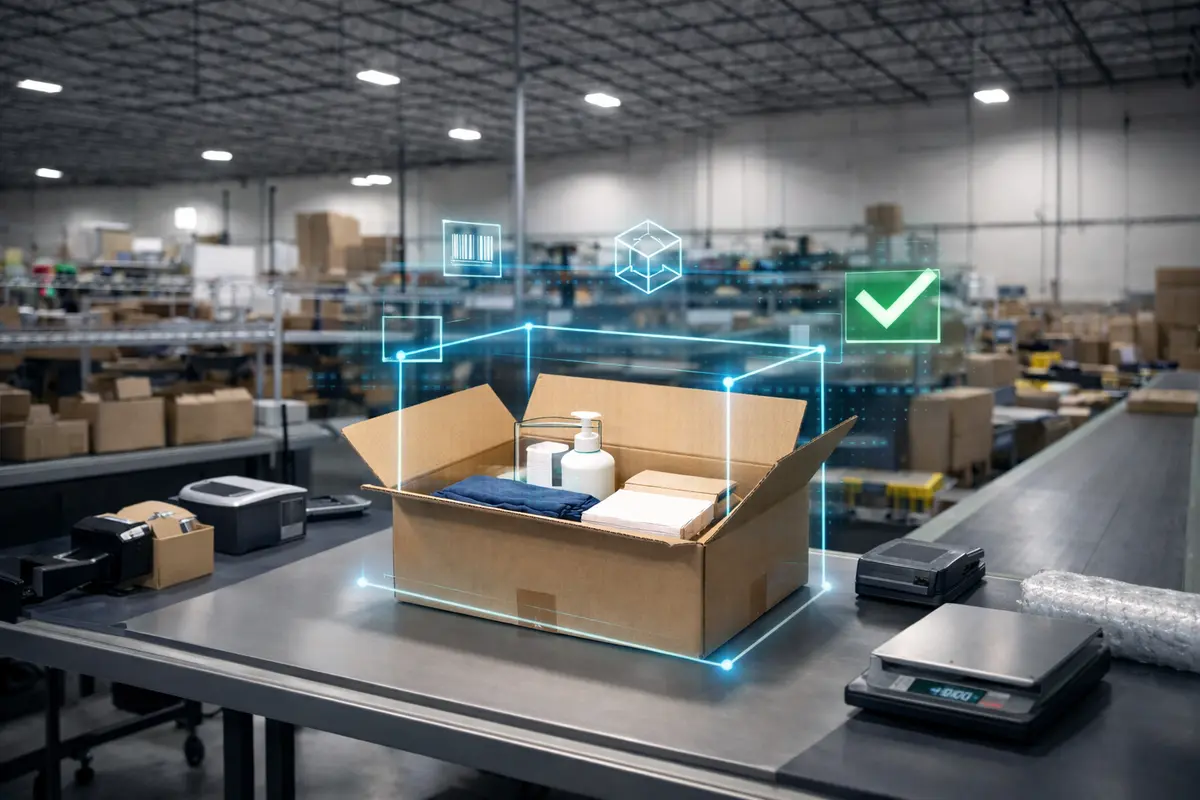
Before comparing vendors, it helps to define what we’re talking about. An AI-powered pack station uses computer vision, machine learning, or both to automate parts of the packing process that previously required manual effort or weren’t possible at all.
Common capabilities include:
- Visual order verification: Camera-based confirmation that the right items are in the box before it ships.
- Packaging compliance: Checking that branded inserts, tissue, void fill, and other materials are present and correct.
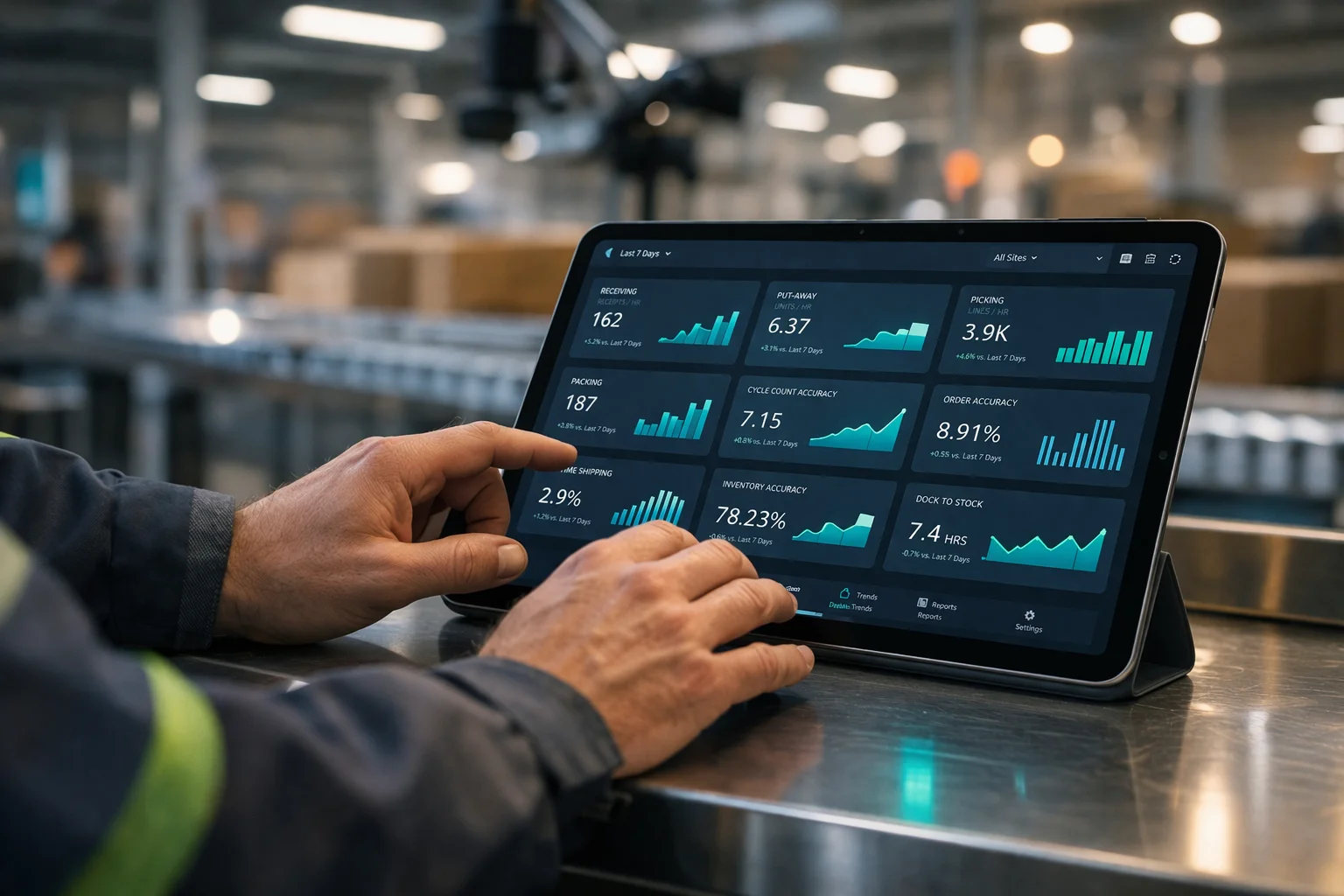
- Performance analytics: Measuring packer speed, throughput, idle time, and efficiency from video data.
- Evidence capture: A searchable visual record of every order for dispute resolution.
- Real-time error detection: Flagging problems so packers can fix them before the box is sealed.
Some vendors focus on one capability. Others try to cover the full spectrum. Your choice depends on which problems cost you the most money.
Rabot
Founded: 2019
Focus: Full-stack vision AI for pack stations (proof, prevention, performance)
Deployment model: Edge computing + cloud portal
WMS integrations: 62+
Rabot covers three use cases from a single camera setup: order proof (visual evidence for every order), error prevention (real-time verification that catches mistakes before they ship), and performance analytics (throughput measurement, idle time tracking, operator coaching).
Customer deployment numbers:
- 113M+ items processed across all customer facilities
- 122B+ frames of visual data analyzed
- Staci Americas: 60% QA cost reduction across 19 stations handling 25,000 orders/day
- Brilliant Fulfillment: 5X ROI within 2 months
- DaVinci: 30% processing time reduction across 6 locations
- Manifest.eco: 90% dispute liability eliminated in 15 days
- Highline Commerce: 95% investigation time reduction
Integration approach: Rabot embeds directly into the WMS workflow. The packer works in their existing WMS interface while Rabot runs in the background. With 62+ pre-built WMS integrations, deployment typically doesn’t require the packer to learn a new system or change their process.
Hardware: Standard USB or IP cameras mounted at the station. Edge processing hardware handles compute on-site, so the system works even when your internet drops. No proprietary cameras required.
Strengths: Most competitors do one thing. Rabot does proof, prevention, and performance from the same setup. The depth of WMS integrations and the scale of production deployments set it apart. Evidence capture is particularly strong for 3PLs who need to resolve client disputes fast.
Considerations: Rabot is built for operations at scale. If you’re running 2-3 stations, the ROI math may take longer to pencil out compared to a simpler solution.
vAudit
Focus: Visual audit and order verification
Deployment model: Camera-based
vAudit captures images of orders at the pack station and provides a visual record for quality assurance and dispute resolution.
Strengths: Straightforward visual audit capability. If your primary need is a photo record of packed orders for QA, vAudit addresses that directly.
Considerations: Narrower focus than full-stack alternatives. If you also need real-time error prevention, performance analytics, or deep WMS integration, you’ll likely need additional tools. Worth evaluating whether audit-only covers enough of your error and cost profile to justify a standalone deployment.
Packcam (SellerHardware)
Focus: Pack station cameras for e-commerce sellers
Deployment model: Hardware + software bundle
Packcam comes from SellerHardware, which sells pack station equipment (tables, monitors, scales) to e-commerce sellers and small fulfillment operations. The camera system integrates with their station hardware to capture packing footage.
Strengths: If you already buy station hardware from SellerHardware, adding Packcam is a natural extension. Less vendor management for smaller operations. The product is designed with Amazon and marketplace sellers in mind.
Considerations: Oriented toward smaller e-commerce operations and marketplace sellers. If you’re a 3PL running dozens of stations across multiple clients with different SOPs, or a large fulfillment operation that needs deep WMS integration, the platform may not scale. AI capabilities are more limited compared to platforms built specifically for computer vision at the pack station.
PackCapture
Focus: Order photo capture and evidence
Deployment model: Camera-based capture
PackCapture photographs orders during the packing process to create a visual record for dispute resolution, quality verification, and customer service.
Strengths: Clear, focused value around order photography and evidence. If your main pain point is dispute resolution and you need photographic proof of what was packed, PackCapture addresses that directly.
Considerations: Like vAudit, PackCapture focuses on proof and evidence rather than real-time error prevention or performance analytics. If your biggest cost driver is errors shipping out the door (not disputes after the fact), a prevention-focused solution will deliver better ROI. Check the depth of WMS integration and whether the system can scale with your operation.
How to evaluate AI for your pack stations
Vendor profiles are a starting point. Your decision should come from your specific operation. Here’s a structured evaluation checklist.
Step 1: Identify your primary pain point
Different problems lead to different solutions:
| Pain point | What you need | Key capability |
|---|---|---|
| Packing errors shipping to customers | Real-time prevention | AI verification with instant alerts |
| Customer/client disputes you can’t resolve | Evidence and proof | Photo/video capture linked to orders |
| Can’t measure packer performance | Analytics | Throughput tracking, idle time, coaching |
| QA labor costs too high | Automation | AI replacing manual inspection steps |
| Brand clients demanding transparency | Client-facing proof | Shareable order evidence |
Most operations have more than one of these. Rank them by cost impact, not by what feels most urgent.
Step 2: Assess integration requirements
Ask yourself:
- Which WMS do you run? Check whether the vendor has a pre-built integration or if you’ll need custom API work.
- How many stations? Pricing models vary. Some vendors charge per station, others per order or per camera.
- Multi-client? If you’re a 3PL, can the system enforce different rules per client from the same station?
- What does your packer’s workflow look like today? Any solution that forces a process change will face adoption resistance.
Step 3: Run a real pilot
Demos always look great. Production is different. Before committing:
- Pilot on your hardest station, not your easiest. Pick the one with the most SKUs, the fastest packers, or the most complex orders.
- Measure before and after. Track error rate, throughput, and packer feedback during the pilot.
- Test at peak volume, not average volume. A system that works at 500 orders/day but chokes at 2,000 is a liability come holiday season.
- Check the false positive rate. Too many false alerts and packers will ignore the system. Ask for false positive data from deployments at similar volume.
Step 4: Calculate ROI
Here’s the basic ROI formula:
Annual savings = (Errors prevented × Cost per error) + (QA labor reduced) + (Dispute resolution time saved)
ROI = Annual savings / Annual cost of the solution
Use the WERC benchmark as a starting point: 1.1% error rate, $41 per error for D2C, $56 for 3PL. If a vendor can cut your error rate in half, multiply your daily order volume by 0.55% by your cost per error by 365. That’s your error-prevention savings alone, before counting QA labor and dispute resolution.
Step 5: Check references at your scale
A vendor that works well for a 5-station operation may struggle at 50. Ask for references from customers at your volume, on your WMS, in your industry. Talk to the ops managers, not the executives who signed the contract.
The decision matrix
| Criteria | Weight it higher if… |
|---|---|
| Real-time error prevention | Your error rate is above 1% or errors cost you $40+ each |
| Evidence/proof capture | You’re a 3PL dealing with client disputes weekly |
| Performance analytics | You can’t currently measure packer productivity |
| WMS integration depth | You don’t have IT resources for custom integration work |
| Multi-client support | You’re a 3PL running 3+ brands from the same facility |
| Scalability | You plan to grow stations by 50%+ in the next 12 months |
| Total cost of ownership | Your margins are tight and every dollar matters |
The AI pack station category has matured fast. The vendors that were first to market aren’t necessarily the best fit for your operation. Define your problem clearly, pilot before you commit, and decide based on measured results, not demo impressions.