CAPA for 3PLs: How to Document Corrective Action for Client Audits
If you fulfill orders for a medical device company, a pharmaceutical brand, or an aerospace supplier, your work may be part of a process your client must control within its quality system.
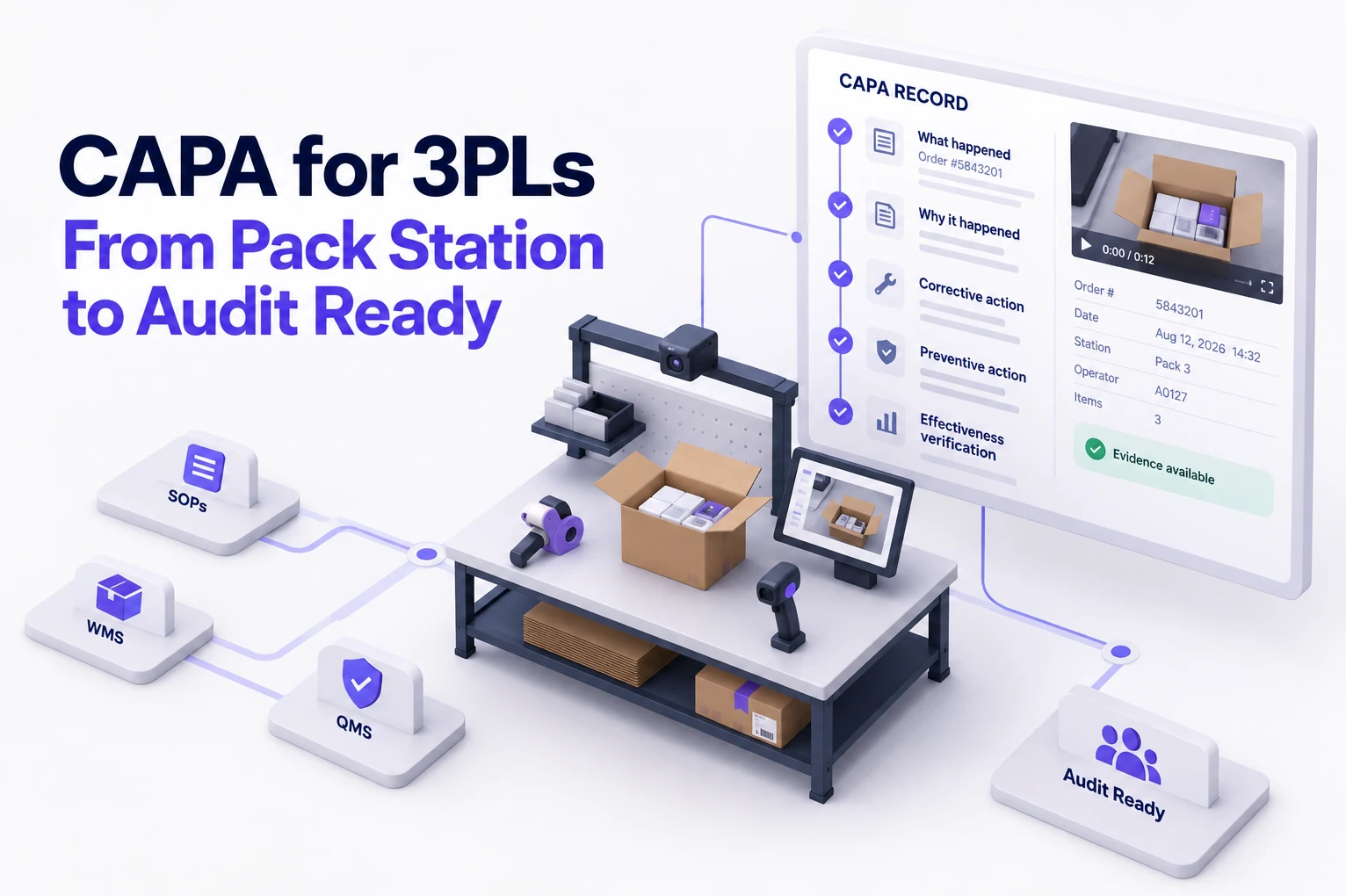
When something goes wrong, your client may need evidence from your operation to complete its investigation. The resulting corrective and preventive action record needs to explain what happened, why it happened, what changed, and how the organization determined that the change worked.
The first question can be the hardest to support: what physically happened to the order?
What is CAPA, and why does it apply to a 3PL?
CAPA stands for corrective and preventive action. Corrective action addresses the cause of a detected nonconformity so it does not recur; preventive action addresses the cause of a potential nonconformity so it does not occur. Both require documented investigation, action, and review of effectiveness. For medical devices, ISO 13485 addresses corrective action in clause 8.5.2 and preventive action in clause 8.5.3. On February 2, 2026, FDA’s Quality Management System Regulation became effective and incorporated ISO 13485 by reference through 21 CFR 820.7, with applicable requirements established by 21 CFR 820.10. Aerospace quality systems address nonconformity and corrective action under AS9100 clause 10.2. A 3PL’s exact obligations depend on the product, contract, and regulatory context, but its records may become evidence in the client’s investigation.
Why written reconstructions may fall short
A common response to a CAPA request is a narrative. Someone interviews the packer, reviews the WMS record, walks the floor, and writes an account of what most likely happened.
An auditor reads that document and asks one question. How do you know?
A WMS record can show that an order was marked as packed, but it may not show what physically entered the carton. A packer’s recollection of a shift three weeks ago can provide context, but it is difficult to substantiate on its own. The resulting narrative is stronger when contemporaneous records support it.
This is a recordkeeping problem. A careful investigation can only work with the evidence the operation captured.
What a defensible CAPA record contains
Five elements make the record more defensible.
- Objective evidence of the event itself. Depending on the process, that may include video, scans, WMS events, timestamps, and the physical sequence at the pack station.
- Root cause supported by evidence. The record should show why the investigation concluded that a step was skipped, a scan failed, or the process was followed correctly and the problem originated elsewhere.
- The corrective action taken, tied to that specific cause.
- The preventive action, when appropriate, addressing the cause of a potential nonconformity before it occurs.
- Effectiveness verification. Defined acceptance criteria and follow-up data showing whether the action produced its intended result.
How order-linked recording changes the record
A pack station record indexed by order number, rather than accessible only by timestamp, changes what a CAPA investigation is. Instead of reconstructing an event, you retrieve it.
That matters in three specific ways during an audit.
Retrieval time. Security camera footage usually requires knowing roughly when something happened and then scrubbing for it. An order-linked record can be retrieved directly by order number, making the investigation faster and easier to reproduce.
Attribution. Some claims against a 3PL originate outside the warehouse. An order-linked record can help the investigation determine whether the packing process contributed to the issue or whether the evidence points elsewhere, such as carrier handling.
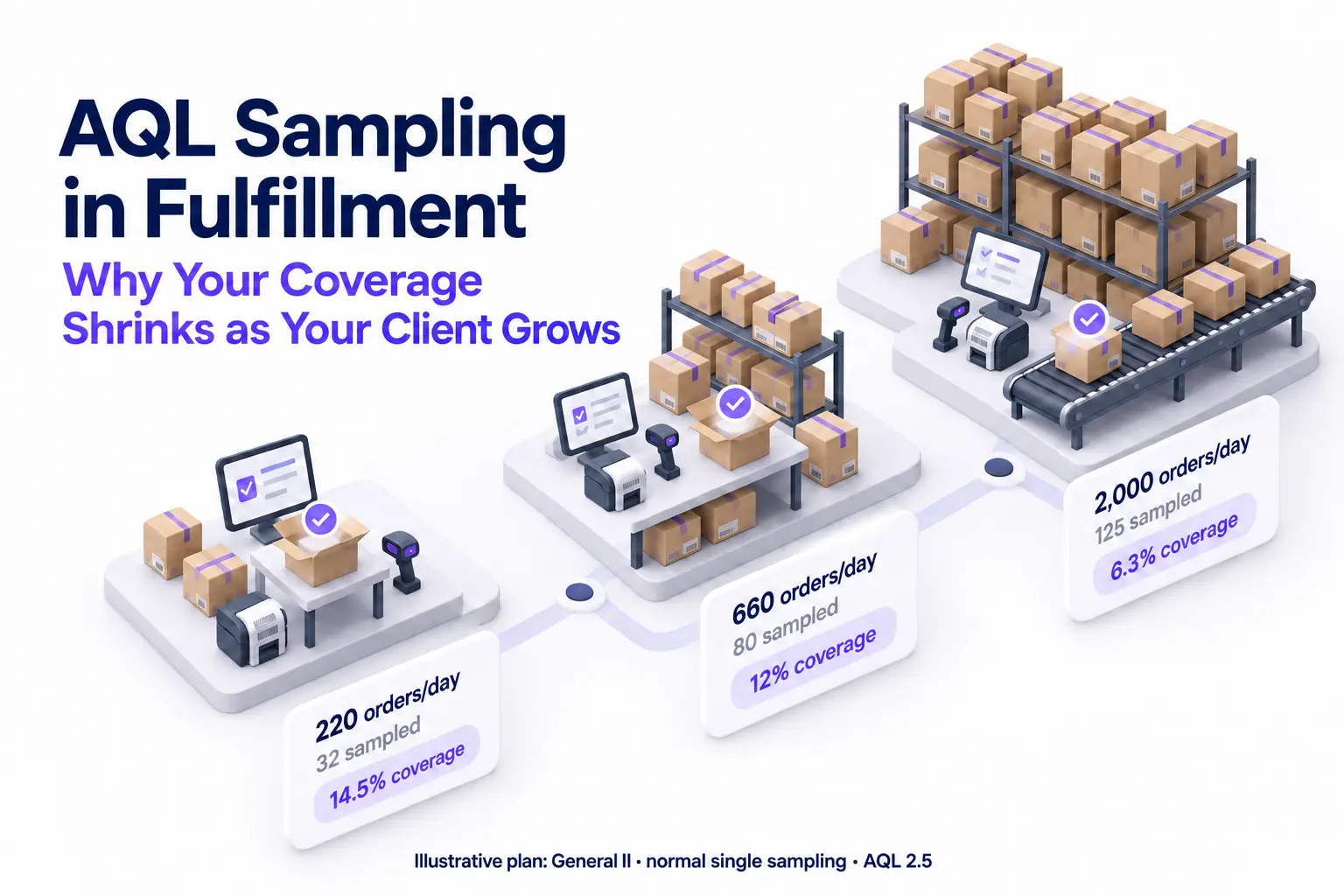
Effectiveness verification. A CAPA plan should define how long to monitor the result, which data to review, and what success looks like. Trend analysis or a risk-based sample may be appropriate; continuous order records can provide broader evidence when the relevant process is recorded. For more on the difference between lot-level and order-level evidence, see why your coverage shrinks as your client grows.
Where this shows up commercially
Evidence capability can appear during vendor selection, not only after an incident. An RFP may ask a 3PL to describe its corrective and preventive action process. A stronger answer explains both the workflow and the evidence that supports it.
That answer gives a regulated brand more confidence that the 3PL can support investigations and document quality events.
A practical starting point
If you already manage CAPA through a ticketing tool or QMS module, you may not need to rebuild the workflow.
Start by asking one question about your last five CAPA records: for each, what evidence supported the account of what happened? If the answer relies mainly on what people remembered, improve the evidence feeding the process. See how order-level records support fulfillment compliance.
References and further reading
- Electronic Code of Federal Regulations, 21 CFR Part 820, Quality Management System Regulation. The current text. Note that the former § 820.100 no longer exists; the operative requirement is § 820.10 and the incorporation by reference sits at § 820.7.
- Food and Drug Administration, Medical Devices; Quality System Regulation Amendments, 89 FR 7496, February 2, 2024. The final rule. “This rule is effective February 2, 2026.” Its response to Comment 20 confirms ISO 13485 treats corrective action (Clause 8.5.2) and preventive action (Clause 8.5.3) separately.
- FDA, Quality Management System Regulation (QMSR) and the accompanying frequently asked questions.
- ISO, ISO 13485:2016, Medical devices, Quality management systems, Requirements for regulatory purposes. The standard itself is paywalled.
- SAE International, AS9100D, Quality Management Systems, Requirements for Aviation, Space, and Defense Organizations.