

Case Study
Pack rate doubled. Pack costs down 64%.
Atomix turned Rabot from a quality check into a continuous operations control tool, running the pack floor on live data, every station, every brand, every order, and doubled its pack rate to 79 orders per hour in the process.
Orders per hour (top customer)
Cost per package reduction
FTE-equivalent labor saved
No visibility into what actually happened at pack stations.
Atomix is a bootstrapped 3PL founded in 2020 and named to the 2025 Inc. 5000, with fulfillment centers in Milwaukee, Salt Lake City, and Baltimore. Its WMS showed macro-level order volumes, but nothing about what happened at each pack station: how long orders took, why some packers were faster than others, or where time was lost.
The floor worked, but it couldn't scale, and leadership had no live view into why: which stations ran hot, which lagged, and where time disappeared between orders. When Drake Meyer joined as VP of Operations in early 2025, the ceiling, and the blind spot underneath it, was obvious.
Drake had run Rabot before, at DaVinci Micro Fulfillment, where it helped cut processing time 30%. At Atomix he found three Rabot cameras already on the floor, used only for quality and video lookup. Valuable, but not yet tapped for throughput.
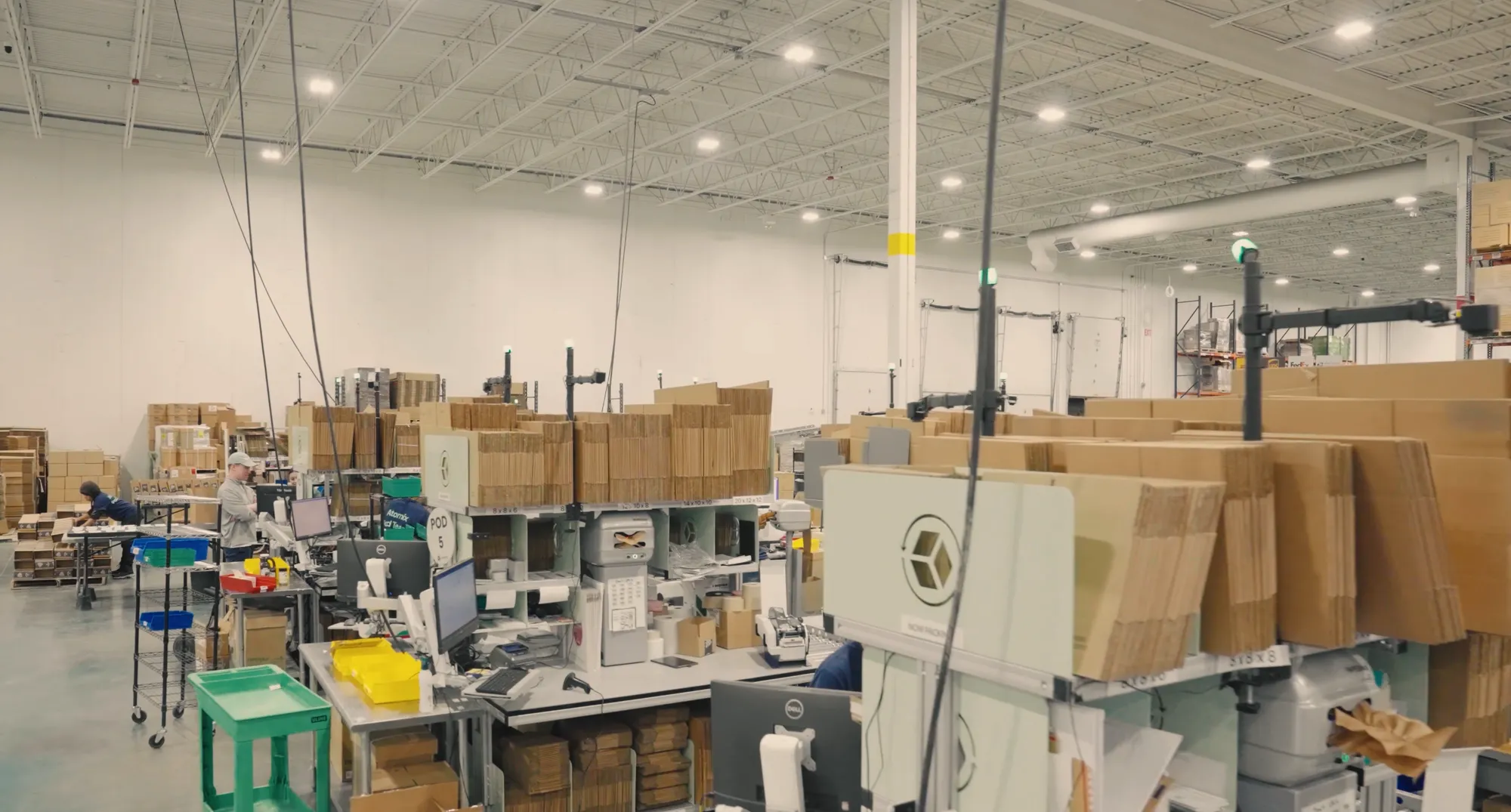
Rabot became the continuous control system for the pack floor.
Drake stopped using Rabot as a rear-view quality check and started using it as a live control system for the floor. The dashboard moved into a command center alongside the operating whiteboards, visible all day, and decisions started getting made off it in real time rather than from reports compiled after the fact.
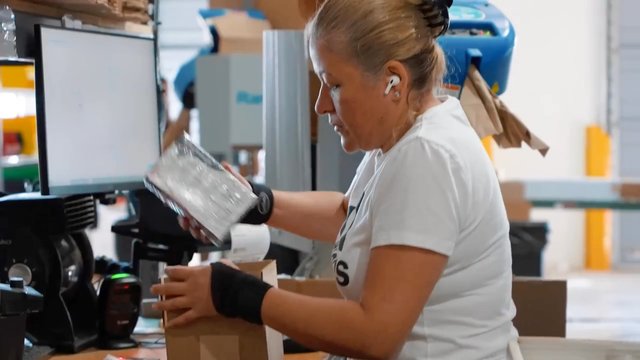
The cameras now answered the question the WMS never could: which pod, which employee, and which customer was fastest, and why a given station wasn't pumping out more boxes.
"What I picture right here is a Rabot camera telling me fastest pod, fastest employee, fastest customer. I can click in and see what's happening and why we're not pumping more boxes out of a pod."
With that control in place, every operator owned their orders from scan to ship and the live numbers held the standard. Rabot had stopped being a quality check and become how the pack floor was run, every shift.
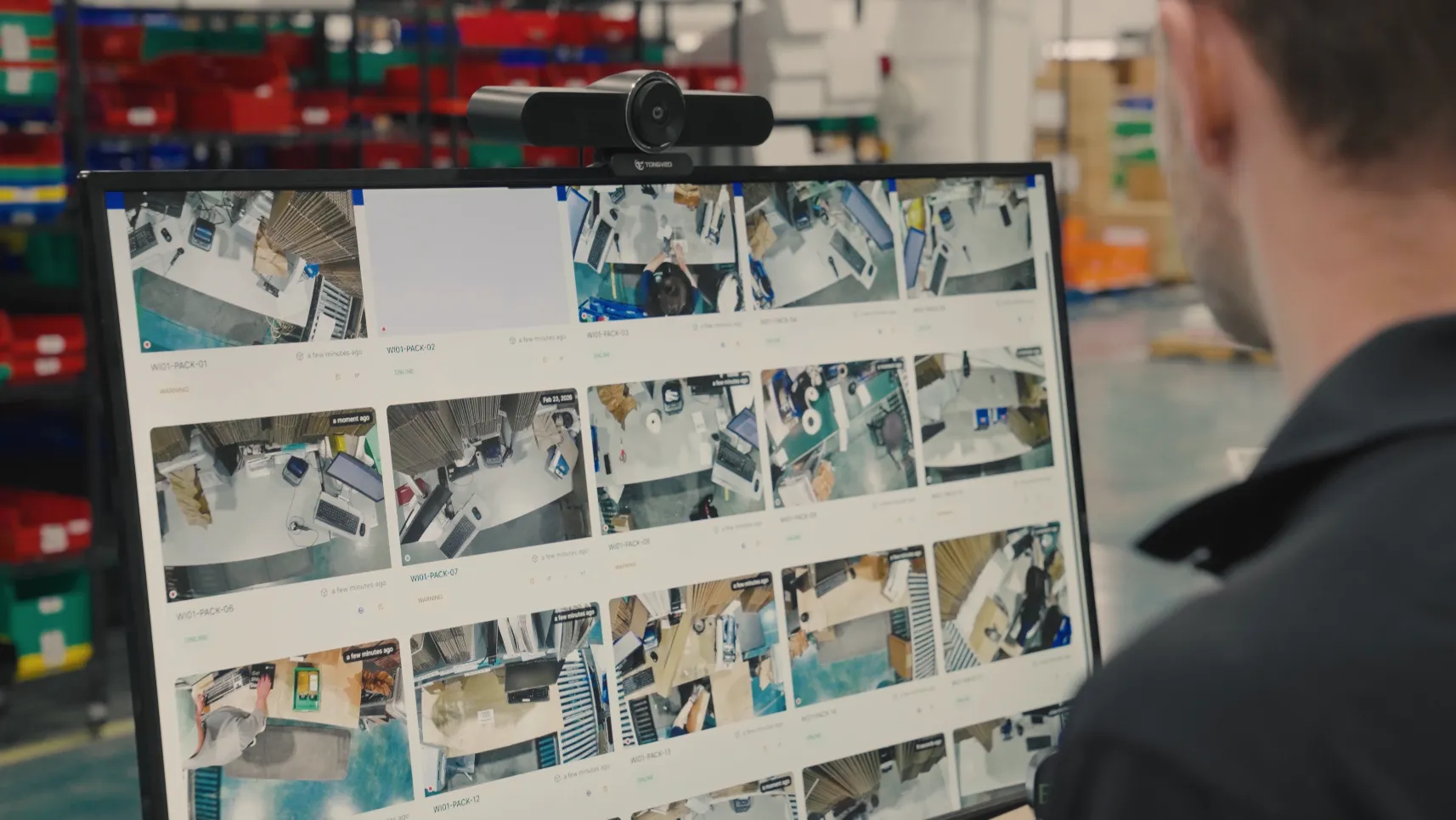
Hidden rework, brand-level pack rates, and a slow station caught in 10 minutes.
On one of the first days with full visibility, CTO Andrew Webber found a 13-unit order that had been attempted seven times, each attempt a complete rescan of every item. The WMS had it marked as worked, with no idea it had been torn down and rescanned seven times. Atomix set a two-attempt maximum rule. "Boom. You're already seeing attempts are down to two. That's basically our max. That is massive."
Rabot also segments performance by brand automatically, something that would be impossible to track manually at scale. "I could pack all day, 20 different brands, and Rabot can decipher which brands I did and how long it took for each one and give me a rate. That's the big win for us." Atomix's billing and sales teams now use that data to analyze margins by client and price fulfillment more accurately.
Floor leads see every station's status in real time, instead of pulling historical reports hours after the fact. "I don't want to be reactive tomorrow. If a station is slow, I need to be reactive within 10 minutes." And when a customer reports a missing item, the CX team pulls the order, watches the pack video, and resolves the claim, with no cycle counts and no tracking down the packer.
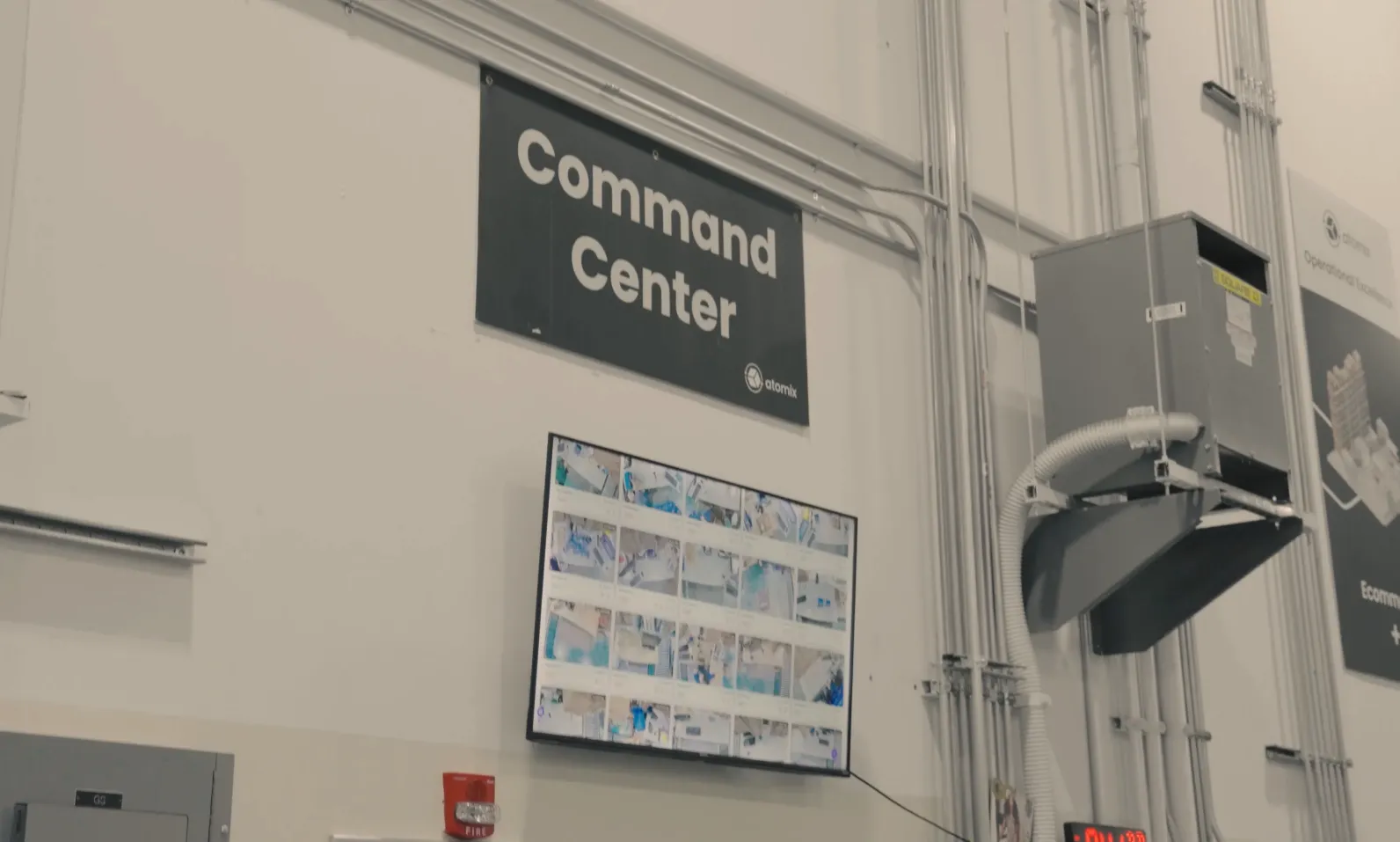
What continuous control delivered.
Orders per hour
Pack rate doubled for their top customer
Cost per package
Lower after the rebuild
FTE-equivalent labor saved
Through real-time productivity management
Pack rate measured for Atomix's top customer, comparing the prior baseline (about 35 orders per hour) to the same customer's throughput under live production management on Rabot (79 orders per hour).
Cost per package reduction and the 5 to 10 FTE-equivalent labor savings are Atomix estimates attributed to real-time productivity management across the pack floor.
"1 month ago we averaged around 35 orders an hour for our top customer. Today we are at 79 orders an hour. Rabot is a production tool not just a quality check. Let's keep going."
Drake Meyer
VP of Operations, Atomix Logistics
Performance. Prevention.
Performance
Run tighter every week.
Atomix ran the floor on live data: fastest pod, fastest employee, fastest customer, with a slow station caught within 10 minutes instead of at the next day's review. Used as a continuous operations control tool, Rabot doubled the pack rate to 79 orders per hour and cut cost per package 64%.
Prevention
Stop errors before they ship.
The camera filled the gap between what the WMS records and what actually happens at the station: a 13-unit order rescanned seven times, invisible until Rabot caught it. A two-attempt maximum rule cut rework immediately, and order-linked video lets the CX team resolve missing-item claims in seconds.
See more results.

Fetch Fulfillment
Order evidence in seconds, without the investigation loop.
Video proof
Case study video
DaVinci Micro Fulfillment
30% processing time reduction across 6 locations.
30% time cut
Multi-location | 6 warehouses
Manifest.eco
90% of dispute liability eliminated in 15 days.
90% liability eliminated
3PL | Growing operation
See your first week of station data.
Book a demo to see real-time pack-floor analytics and order-linked video in your operation.